Are potato chips and ice cream as addictive as cigarettes and alcohol?
Advert
Wellness
Are spud chips and water ice cream equally addictive as cigarettes and alcohol?
Food researchers debate whether such highly processed foods are addictive, triggering our brains to overeat.
(Photos: Pexels/Alena Shekhovtcova and Unsplash/Ian Dooley)
V years ago, a grouping of nutrition scientists studied what Americans eat and reached a striking conclusion: More than one-half of all the calories that the average American consumes comes from ultra-processed foods, which they divers as "industrial formulations" that combine big amounts of carbohydrate, common salt, oils, fats and other additives.
Highly candy foods proceed to dominate the American nutrition, despite being linked to obesity, heart disease, Blazon 2 diabetes and other health problems.
They are cheap and convenient, and engineered to sense of taste good. They are aggressively marketed by the food industry.
Only a growing number of scientists say another reason these foods are so heavily consumed is that for many people they are not just tempting but addictive, a notion that has sparked controversy among researchers.
READ: There's at present a listing of Asian foods to wait out for if you lot're worried nearly diabetes
Recently, the American Journal Of Clinical Nutrition explored the science behind food habit and whether ultra-processed foods might exist contributing to overeating and obesity.
It featured a fence between two of the leading experts on the subject area, Ashley Gearhardt, associate professor in the psychology section at the University of Michigan, and Dr Johannes Hebebrand, head of the department of child and adolescent psychiatry, psycho-somatics and psychotherapy at the University of Duisburg-Essen in Deutschland.
Dr Gearhardt, a clinical psychologist, helped develop the Yale Food Addiction Scale, a survey that is used to decide whether a person shows signs of addictive behaviour toward nutrient.
In one report involving more than 500 people, she and her colleagues institute that certain foods were especially likely to elicit "addictive-like" eating behaviours, such as intense cravings, a loss of command, and an disability to cut back despite experiencing harmful consequences and a strong want to stop eating them.
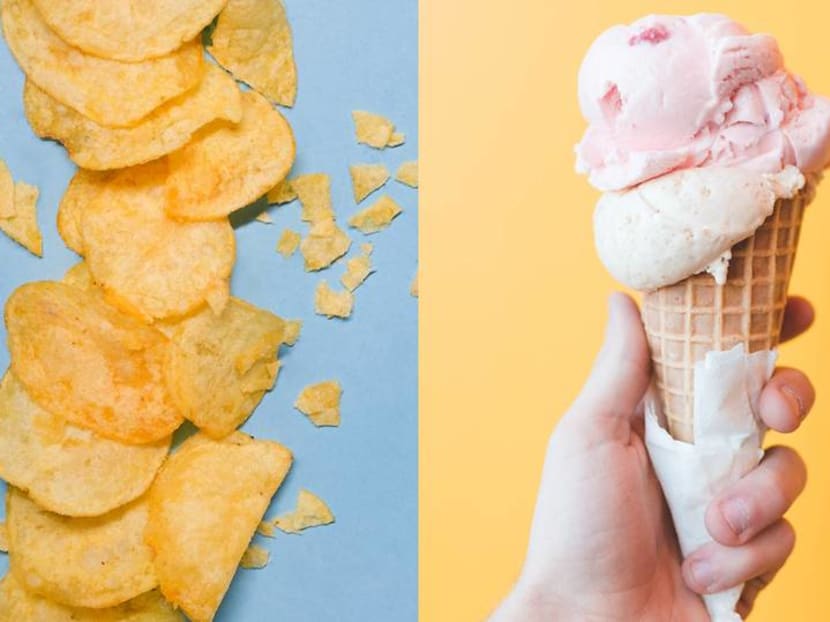
At the tiptop of the list were pizza, chocolate, irish potato chips, cookies, ice cream, French fries and cheeseburgers. Dr Gearhardt has establish in her enquiry that these highly processed foods share much in common with addictive substances.
Like cigarettes and cocaine, their ingredients are derived from naturally occurring plants and foods that are stripped of components that tedious their absorption, such every bit fibre, water and poly peptide.
Then, their most pleasurable ingredients are refined and processed into products that are rapidly absorbed into the bloodstream, enhancing their ability to lite up regions of the brain that regulate reward, emotion and motivation.
We are all ingesting highly processed foods, and none of us is experiencing this contradistinct country of mind because at that place's no direct hit of a substance in the brain.
Salt, thickeners, artificial flavours and other additives in highly processed foods strengthen their pull by enhancing properties like texture and oral cavity-feel, similar to the way that cigarettes comprise an array of additives designed to increase their addictive potential, said Dr Gearhardt.
Menthol helps to mask the bitter flavour of nicotine, for instance, while some other ingredient used in some cigarettes, cocoa, dilates the airways and increases nicotine's absorption.
A common denominator amongst the near irresistible ultra-candy foods is that they contain large amounts of fatty and refined carbohydrates, a potent combination that is rarely seen in naturally occurring foods that humans evolved to consume, such every bit fruits, vegetables, meat, basics, honey, beans and seeds, said Dr Gearhardt.
Many foods plant in nature are rich in either fat or carbs, but typically they are not high in both.
READ: Why that heartburn might be stomach cancer – and how salty food increases the risk
"People don't feel an addictive behavioural response to naturally occurring foods that are good for our health, like strawberries," said Dr Gearhardt, director of the Food and Addiction Science and Treatment lab at the Academy of Michigan.
"It'due south this subset of highly candy foods that are engineered in a way that's so similar to how we create other addictive substances. These are the foods that tin can trigger a loss of control and compulsive, problematic behaviours that parallel what we run into with alcohol and cigarettes."

In one study, Dr Gearhardt constitute that when people cutting back on highly candy foods, they experienced symptoms that were comparable to the withdrawal seen in drug abusers, such as irritability, fatigue, feelings of sadness and cravings.
Other researchers have found in brain imaging studies that people who ofttimes consume junk foods tin can develop a tolerance to them over fourth dimension, leading them to crave larger and larger amounts to get the aforementioned enjoyment.
In her clinical exercise, Dr Gearhardt has encountered patients – some obese and some non – who struggle in vain to control their intake of highly processed foods. Some attempt to eat them in moderation, only to find that they lose control and eat to the point of feeling sick and distraught.
Many of her patients find that they cannot quit these foods despite struggling with uncontrolled diabetes, excessive weight proceeds and other health problems.
These are the foods that tin can trigger a loss of control and compulsive, problematic behaviours that parallel what nosotros see with alcohol and cigarettes.
"The striking matter is that my clients are about ever acutely aware of the negative consequences of their highly processed nutrient consumption, and they take typically tried dozens of strategies similar crash diets and cleanses to endeavor and go their relationship with these foods under control," she said.
"While these attempts might work for a short fourth dimension, they nearly always end up relapsing."
Simply Dr Hebebrand disputes the notion that any food is addictive. While potato chips and pizza can seem irresistible to some, he argues that they do not crusade an altered land of listen, a hallmark of addictive substances.
Smoking a cigarette, drinking a drinking glass of wine or taking a hit of heroin, for instance, causes an immediate sensation in the brain that foods do non, he says.
READ: Do you microwave food in plastic containers? Be careful of leaching chemicals
"Yous can take whatsoever addictive drug, and it's e'er the same story that virtually anybody will accept an contradistinct land of mind after ingesting it," said Dr Hebebrand.
"That indicates that the substance is having an effect on your central nervous system. Simply we are all ingesting highly candy foods, and none of us is experiencing this altered state of listen because at that place's no straight hit of a substance in the brain."
In substance use disorders, people go dependent on a specific chemical that acts on the brain, like the nicotine in cigarettes or the ethanol in wine and liquor.
They initially seek out this chemical to become a high, and then become dependent on information technology to convalesce depressed and negative emotions.

Just in highly processed foods, there is no ane compound that can be singled out as addictive, Dr Hebebrand said.
In fact, prove suggests that obese people who overeat tend to swallow a wide range of foods with different textures, flavours and compositions.
Dr Hebebrand argued that overeating is driven in part by the food industry marketing more than 20,000 new products every yr, giving people admission to a seemingly endless variety of foods and beverages.
"It'southward the variety of foods that is so appealing and causing the problem, not a unmarried substance in these foods," he added.
Those who argue against food habit also indicate out that most people consume highly candy foods on a daily ground without showing any signs of addiction.
But Dr Gearhardt notes that addictive substances do non hook everyone who consumes them.
READ: No crimson meat, more veggies? How to know if a plant-based nutrition is correct for you lot
According to research, well-nigh two-thirds of people who smoke cigarettes go along to become addicted, while a third exercise not.
Only about 21 per cent of people who use cocaine in their lifetimes become fond, while merely 23 per cent of people who drink alcohol develop a dependence on it.
Studies suggests that a wide range of factors determine whether people become addicted, including their genetics, family histories, exposure to trauma, and ecology and socioeconomic backgrounds.
"Well-nigh people try addictive substances and they don't become addicted," Dr Gearhardt said. "Then if these foods are addictive, we wouldn't expect that 100 per cent of guild is going to exist addicted to them."

For people who struggle with limiting their intake of highly processed foods, Dr Gearhardt recommends keeping a periodical of what you lot eat and so you can identify the foods that have the most pull – the ones that cause intense cravings and that you can't end eating once you commencement.
Keep those foods out of your dwelling house, while stocking your fridge and pantry with healthier alternatives that yous bask, she said.
Keep track of the triggers that lead to cravings and binges. They could be emotions like stress, boredom and loneliness. Or it could be the Dunkin' Donuts that yous drive by three times a calendar week.
Make a plan to manage those triggers by a taking a different road domicile, for example, or by using nonfood activities to alleviate stress and boredom.
And avoid skipping meals, considering hunger can set off cravings that atomic number 82 to regrettable decisions, she said.
"Making certain you are regularly fuelling your body with nutritious, minimally candy foods that yous enjoy can exist of import for helping you navigate a very challenging food environs," said Dr Gearhardt.
By Anahad O'Connor © The New York Times
This article originally appeared in The New York Times.
https://www.nytimes.com/2021/02/xviii/well/swallow/nutrient-addiction-fat.html

0 Response to "Are potato chips and ice cream as addictive as cigarettes and alcohol?"
Post a Comment